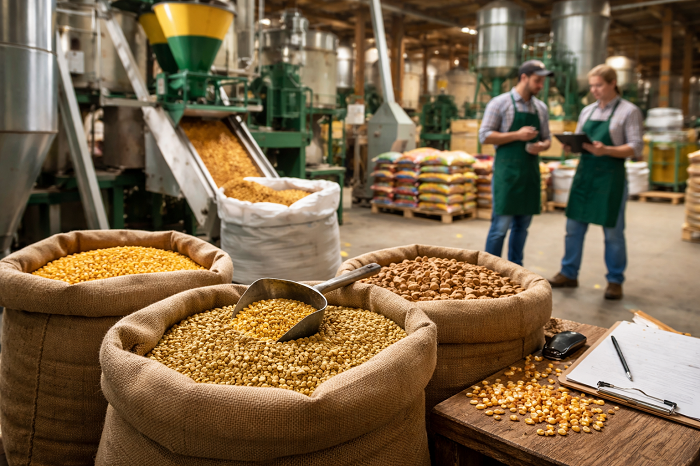
The agriculture and livestock sector continues to play a vital role in global food production, and at the heart of this ecosystem lies one essential component — animal feed. Whether it is poultry, dairy, fisheries, or livestock farming, quality feed directly impacts productivity, health, and profitability. This makes the animal feed industry one of the most promising and resilient business opportunities in the modern agricultural economy.
If you are exploring profitable ventures in the agriculture category, understanding the Top 10 Benefits of Starting an Animal Feed Business can help you make an informed decision. This comprehensive guide explains why this sector offers long term stability, consistent demand, and scalable growth potential for entrepreneurs.
Introduction to the Animal Feed Industry
Animal feed refers to specially formulated food products designed to meet the nutritional requirements of livestock such as cattle, poultry, pigs, goats, sheep, and fish. With rising global demand for milk, meat, eggs, and aquaculture products, the feed industry has expanded rapidly.
As populations grow and dietary patterns shift toward protein rich foods, livestock farmers must focus on higher productivity. That productivity depends significantly on scientifically balanced feed. This ongoing demand creates a strong foundation for entrepreneurs interested in building a sustainable and profitable enterprise.
1. Consistent and Growing Market Demand
One of the biggest advantages of starting an animal feed business is steady market demand. Unlike seasonal industries, feed consumption remains continuous throughout the year. Farmers require daily feed supplies to maintain animal health and productivity.
As the global population increases and protein consumption rises, livestock production expands accordingly. This ensures long term demand for feed products, making it a relatively stable and recession resistant industry.
2. High Profit Margins with Smart Management
When managed efficiently, animal feed manufacturing can offer attractive profit margins. Raw materials such as maize, soybean meal, wheat bran, and mineral mixtures can be sourced strategically to optimize production costs.
By developing quality formulations and building strong supplier relationships, businesses can improve margins while maintaining competitive pricing. Value added products such as fortified feed, organic feed, or customized formulations further increase profitability.
3. Scalability and Expansion Opportunities
The animal feed business is highly scalable. Entrepreneurs can begin with a small scale unit serving local farmers and gradually expand to regional or national distribution.
As your customer base grows, you can diversify into poultry feed, cattle feed, fish feed, or specialty feeds. With the right equipment and quality control systems, scaling production becomes both practical and profitable. Expansion into related services such as farm consultancy or feed distribution networks can further boost revenue.
4. Diverse Customer Base
Another significant benefit is the wide customer base. Poultry farms, dairy farms, goat farms, pig farms, fish farms, and independent livestock owners all require feed regularly.
This diversity reduces dependency on a single market segment. If one sector experiences temporary slowdown, others may continue to grow. Such diversification strengthens business stability and minimizes financial risk.
5. Opportunity for Innovation and Branding
Modern farmers increasingly seek scientifically formulated and performance oriented feed solutions. This creates opportunities for innovation in nutrient balancing, probiotics, enzyme supplements, and organic feed options.
By investing in research and quality testing, businesses can differentiate themselves in the market. Strong branding focused on quality, animal health, and improved productivity builds customer loyalty and long term trust.
6. Contribution to Food Security
Starting an animal feed business is not only profitable but also socially impactful. Quality feed improves livestock productivity, which directly contributes to increased milk, meat, and egg production.
By supporting farmers with reliable feed supplies, you contribute to food security and agricultural development. This positive impact can also enhance your brand reputation and open doors to government support or agricultural partnerships.
7. Government Support and Agricultural Policies
In many regions, governments actively support livestock and agribusiness initiatives. Subsidies, loans, grants, and technical assistance programs are often available to encourage feed manufacturing and agricultural entrepreneurship.
Such support reduces startup barriers and makes the animal feed industry more accessible for new entrants. Staying informed about local agricultural policies can help maximize available incentives.
8. Recurring Revenue Model
Animal feed operates on a recurring revenue model. Farmers purchase feed consistently, often in bulk and at regular intervals. Establishing long term contracts with farms ensures predictable cash flow and steady income.
By maintaining product quality and reliable delivery schedules, businesses can build recurring monthly revenue, which is essential for long term financial stability.
9. Strong Rural and Urban Market Integration
The animal feed business bridges rural and urban economies. While production units may operate near agricultural areas, demand is driven by urban consumption of dairy and meat products.
This integration creates stable supply chains and constant demand flow. Entrepreneurs can strategically position their facilities near farming clusters to reduce transportation costs and improve operational efficiency.
10. Long Term Business Sustainability
The livestock sector has existed for centuries and will continue to grow alongside human populations. As long as people consume animal based products, feed will remain essential.
Unlike trend based industries, animal feed manufacturing is built on fundamental human needs. With proper quality control, transparent sourcing, and ethical practices, it can evolve into a sustainable multi generational business.
Key Factors for Success in the Animal Feed Business
While the benefits are substantial, success requires careful planning. Entrepreneurs must focus on raw material sourcing, quality assurance, proper formulation, machinery selection, licensing compliance, and distribution channels.
Developing strong relationships with farmers and understanding their specific needs will improve customer retention. Marketing efforts should highlight product performance, nutritional value, and cost effectiveness.
For readers exploring related opportunities, you may also consider internal topics such as how to start a livestock farming business or how to build a profitable agriculture supply chain to expand your understanding of the broader ecosystem.
Conclusion
Understanding the Top 10 Benefits of Starting an Animal Feed Business reveals why this sector remains one of the most stable and rewarding opportunities within the agriculture industry. From consistent demand and scalable growth to recurring revenue and social impact, the advantages are both financial and strategic.
For aspiring entrepreneurs seeking a resilient and future proof business model, animal feed manufacturing offers long term sustainability backed by global food demand. With proper planning, quality control, and farmer focused service, this venture can evolve into a highly profitable and respected enterprise.