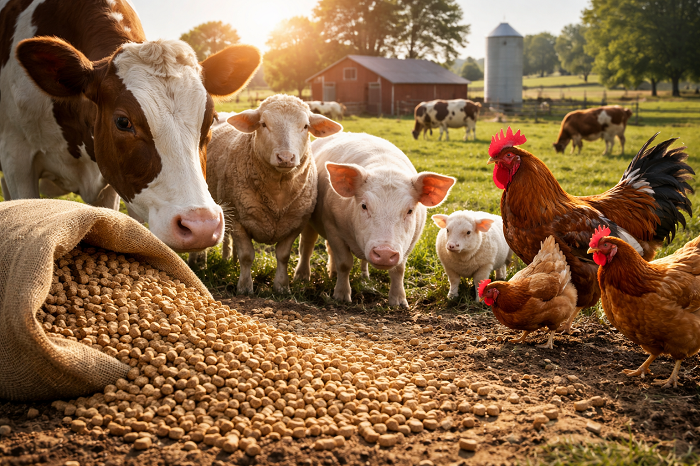
In modern livestock production, feed quality directly influences animal health, growth performance, and farm profitability. As feed manufacturing technology has advanced, pellet feed has become one of the most preferred feeding formats across poultry, cattle, sheep, goats, pigs, and even aquaculture. Farmers and feed mill owners are increasingly shifting from mash or loose feed to pelleted feed because of its proven efficiency and economic advantages.
If you are involved in feed production or livestock farming, understanding the top 10 benefits of using pellet feed for livestock can help you improve productivity while reducing waste and operational costs. This comprehensive guide explains why pellet feed is transforming animal nutrition and how it can elevate your farm’s performance.
What Is Pellet Feed
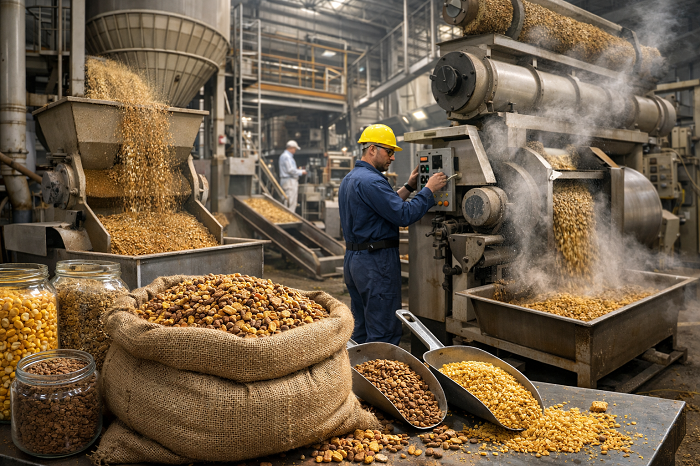
Pellet feed is manufactured by grinding raw ingredients into a uniform mixture and then compressing them through a pellet mill under heat and pressure. The result is dense, compact pellets that contain balanced nutrients in every bite. The pelleting process improves feed consistency, enhances digestibility, and makes storage and transportation easier.
Now let us explore the key advantages in detail.
1. Improved Feed Efficiency and Reduced Waste
One of the most significant benefits of pellet feed is improved feed efficiency. Unlike mash feed, which can be easily sorted by animals, pellets prevent selective feeding. Livestock consume a complete and balanced diet because all ingredients are evenly distributed within each pellet.
Pellets also reduce feed wastage. Loose feed often results in dust formation, spillage, and ingredient separation during handling and transport. Pellet feed minimizes these losses, ensuring that more nutrients actually reach the animal rather than being wasted on the floor or lost in storage. Over time, this directly improves feed conversion ratios and farm profitability.
2. Enhanced Digestibility and Nutrient Absorption
The pelleting process involves heat and moisture, which partially gelatinize starches and break down complex nutrients. This improves digestibility and allows animals to absorb nutrients more efficiently.
Better nutrient absorption means faster growth rates in poultry, improved milk yield in dairy cattle, and healthier weight gain in pigs and small ruminants. For feed manufacturers, this translates into a product that delivers measurable performance results, making it easier to build customer trust and brand loyalty.
3. Increased Growth Rate and Performance
Livestock fed with high quality pellet feed often show improved growth performance compared to those fed mash feed. Because pellets are easier to consume and digest, animals spend less energy eating and more energy converting feed into muscle, milk, or eggs.
In broiler production, pellet feed can significantly improve average daily gain and reduce the time required to reach market weight. In dairy and beef cattle, consistent nutrient intake supports better body condition and production efficiency.
4. Better Feed Intake and Palatability
Pellet feed is generally more palatable than loose feed. The uniform shape and texture encourage consistent consumption. Animals are more likely to eat the entire ration, which helps maintain balanced nutrition.
In addition, reduced dust levels make pellet feed more appealing and safer for respiratory health. Dusty feed can cause breathing issues, especially in poultry houses. Pelleting minimizes this problem and creates a cleaner feeding environment.
5. Improved Handling and Storage
Another important advantage of pellet feed is ease of handling. Pellets are compact and dense, which simplifies transportation, storage, and automated feeding systems.
Feed mills can store larger quantities in less space compared to mash feed. Farmers benefit from reduced segregation during transport, as ingredients remain bound together. This ensures uniform feed quality from the mill to the feeding trough.
6. Reduced Feed Contamination and Pathogen Risk
The heat generated during the pelleting process helps destroy harmful microorganisms such as bacteria and molds. This improves feed safety and reduces the risk of disease transmission through contaminated feed.
Safer feed contributes to healthier livestock, lower veterinary costs, and improved biosecurity standards. In commercial farming operations where disease outbreaks can cause significant losses, pellet feed provides an added layer of protection.
7. Better Feed Conversion Ratio
Feed conversion ratio, often referred to as FCR, is a key performance indicator in livestock production. Pellet feed improves FCR because animals digest nutrients more efficiently and waste less feed.
A better FCR means less feed is required to produce one kilogram of meat, milk, or eggs. This has a direct impact on production costs and overall farm profitability. When feed accounts for up to 70 percent of total livestock expenses, even small improvements in FCR can generate substantial financial benefits.
8. Uniform Nutrient Distribution
In mash feed, ingredients can separate during transport and handling, leading to inconsistent nutrient intake. Pellet feed eliminates this issue because each pellet contains a balanced mixture of proteins, carbohydrates, fats, vitamins, and minerals.
Uniform nutrient distribution ensures that every animal in the herd or flock receives consistent nutrition. This reduces performance variability and supports uniform growth, which is especially important in commercial poultry and swine operations.
9. Reduced Labor and Feeding Time
Pellet feed flows easily through automated feeding systems, reducing manual labor. Animals also consume pellets faster than mash feed, which decreases feeding time and improves operational efficiency.
For large scale farms, this efficiency can translate into significant savings in labor costs and improved overall management. Farmers can focus more on monitoring animal health and less on feed distribution challenges.
10. Environmental Benefits and Sustainability
Reduced feed wastage means fewer nutrients are lost into the environment. Pellet feed also improves nutrient utilization, which can lower nitrogen and phosphorus excretion.
Better nutrient efficiency contributes to more sustainable livestock production. With growing concerns about environmental impact and regulatory compliance, pellet feed supports responsible farming practices.
Why Pellet Feed Is the Future of Livestock Nutrition
As the livestock industry becomes more technology driven, pellet feed continues to gain popularity due to its efficiency, safety, and economic advantages. Whether you are a small scale farmer or a large feed mill owner, investing in high quality pelleting technology can significantly improve production outcomes.
If you are exploring advanced feed manufacturing solutions, consider learning more about pellet mill machines, feed formulation strategies, and quality control practices to maximize the benefits discussed in this guide.
Conclusion
Understanding the top 10 benefits of using pellet feed for livestock highlights why it has become a cornerstone of modern feed manufacturing. From improved feed efficiency and better growth rates to enhanced safety and sustainability, pellet feed offers a comprehensive solution for today’s livestock challenges.
For farmers seeking higher productivity and feed manufacturers aiming to deliver premium quality products, pellet feed represents a smart and strategic investment. By adopting advanced pelleting technology and maintaining strict quality standards, you can improve animal performance, reduce operational costs, and strengthen your position in the competitive livestock industry.